In brief:
By moving from conventional manual to automated monitoring workflows we maintain the Severn Partnership push to promote the safest, greenest working methods possible by keeping boots off the ground and reducing the number of site visits.
Monitoring an asset reduces the risk and potential costs of that asset failing or becoming damaged. With round the clock monitoring, trends can be observed, and issues can be caught before they become serious. This cost-effective method can extend the life of an asset through timely intervention.
By removing the manual element of your monitoring regimes, you reduce the risk to workers
- Having to visit the site to collect readings.
- Boots off Ballast & Boots off Black Top.
- Reducing their secondary risks such as traffic incidents getting to site.
- Using IoT devices to send data direct from site to a monitored web portal.
The systems can be automated & solar powered to send results and warnings direct by interactive dashboard, emails or text alerts.


In Detail:
With the changing climate we are seeing sea level rises and more regular extreme weather events. This puts pressure on structures such as embankments, cliffs and cuttings and when these fail, they can affect the safety of the public, workers and the integrity of structures.
80% of Network Rail failures follow prolonged rainfall and in 2019/2020 there were 252 reportable failures in cuttings and embankments. With 190,000 earthworks to manage this is a pressing concern.
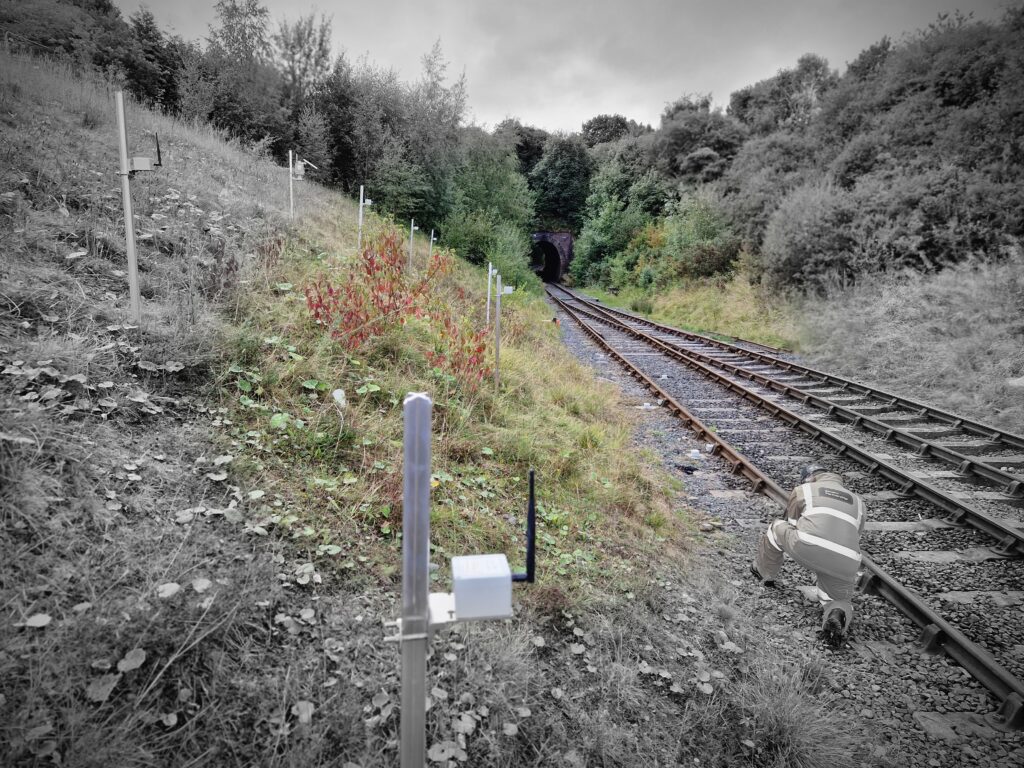
Long-term, low-cost, lean monitoring can be installed on identified areas of concern and triggers can alert asset managers when movement is taking place. This early warning system can prevent major failures and extend asset life with timely intervention.
Automated technology is the answer:
Using the latest Mesh & LoRaWAN IoT technology we can monitor structural & ground movement to sub-millimetre accuracy, with automatic alarms that trigger based on client-tailored tolerances. This system runs on long life batteries & solar power, reducing the need for noise polluting generators and cables causing trip hazards.
We offer a bespoke instrumentation & monitoring (I&M) solution based upon the individual needs of the project. This is then monitored 24hrs a day and reported back to clients as often as they require. Triggers can also be sent directly to site so action can be taken to identify & rectify movement.
How do tiltmeters work?
Modern versions of the tiltmeters use an accelerometer, which monitors the effect of gravity on a tiny mass suspended in an elastic support structure. As the mass moves, it and its electrode will change position relative to the fixed electrode.
The tilt angle is calculated from the difference in measured capacitance (charge) between the two, recorded and transmitted in real time. They measure the 3rd axis (yaw) using gyroscope measurements from the magnetic field.

Rail track alignment tiltmeters:
The use of PA approved tiltmeters can be a safer, more cost affective alternative to traditional track monitoring as there is less maintenance visits and higher round the clock reporting rate.
Tiltmeters can report on important track geometry factors and the software can translate this into easy to read reports without the element of human error.
Data Security:
Recorded data is transmitted using Proprietary Radio Encryption to a Server Cloud. Here it is hosted and decrypted into raw engineering values which are accessed via a proprietary web interface for data presentation and review
The technology adopts industry standards and best practices to safeguard customer data. These credentials include ISO 27001 (Information security management System Certification), ISO 27017, ISO 27018, CSA STAR, ISO 9001
Summary:
Long-term monitoring regime implemented upon an asset, old or new, where the aim is to ascertain hidden issues or changes in its structural health through time without the use of traditional destructive testing methods or site visits. A lean, long-term wireless system is a cost-effective approach that reduces the risk and potential costs of that asset failing or becoming damaged through timely, proactive intervention.
Do you have an embankment or cutting requiring safe access, vegetation clearance, monitoring and 24hr reporting? If so, our in-house Monitoring team are able to plan, advise on specification and support you through the project.
Learn more about our Automated Monitoring services here, or head on over to our contact form to get in touch.